
Living with persistent anal discomfort, localized itching, or witnessing bright red blood during bowel movements can turn everyday life into an agonizing ordeal. Anorectal disorders like hemorrhoids (piles), anal fissures, fistulas, and pilonidal sinuses are incredibly common lifestyle disorders. Yet, due to societal stigma or fear of painful surgical procedures, many individuals delay seeking treatment. They often rely on temporary over-the-counter ointments, allowing the underlying disease to progress into complex clinical conditions.
If you are suffering in silence and searching for a permanent, non-surgical root-cause resolution, consulting the right medical professional is critical. Dr. Vinay Kumar, a highly respected anorectal specialist and expert Ksharasutra surgeon at Arogyam Piles Clinic and Research Center, stands out as the premier piles specialist doctor in chandigarh mohali. With over 15 years of specialized clinical experience, our clinic has successfully treated thousands of patients throughout the Tri-city area, Ropar, Hamirpur, and Shimla. We prioritize gentle, long-term healing using authentic, evidence-based Ayurvedic surgery (Anushastra Karma).
Understanding the Enemy: Piles, Fissures, and Fistulas Explained
Before exploring advanced Ayurvedic solutions, it is essential to correctly differentiate between common anorectal conditions. While their symptoms frequently overlap, their structural anatomy and treatment paths vary significantly.
+------------------------------------------------------------------------------------------+
|                       DIFFERENTIATING COMMON ANORECTAL CONDITIONS                        |
+-------------------+-------------------------------------+--------------------------------+
| Condition         | Primary Structural Pathology        | Dominant Symptoms              |
+-------------------+-------------------------------------+--------------------------------+
| Piles             | Inflamed, swollen, and dilated      | Painless bright red bleeding,  |
| (Hemorrhoids)     | vascular cushions in the anal canal | prolapsed tissue lumps, itching|
+-------------------+-------------------------------------+--------------------------------+
| Anal Fissure      | An acute or chronic longitudinal    | Sharp, tearing pain during     |
|                   | tear in the mucosal lining          | defecation, minor spotting     |
+-------------------+-------------------------------------+--------------------------------+
| Anal Fistula      | An abnormal tunnel connecting an    | Chronic pus drainage, recurring|
| (Fistula-in-Ano)  | infected internal anal gland to skin| painful abscesses, swelling    |
+-------------------+-------------------------------------+--------------------------------+
| Pilonidal Sinus   | An abnormal tract under the skin    | Pain, swelling, and fluid discharge|
|                   | near the tailbone containing hair   | at the base of the spine       |
+-------------------+-------------------------------------+--------------------------------+
1. Piles (Hemorrhoids)
Piles develop when the veins surrounding the lower anus or rectum stretch under excessive pressure, swelling into vascular pads. They can be internal (bleeding but painless) or external (painful lumps forming outside the anal rim). Chronic constipation, straining during stool elimination, and heavy lifting are primary triggers.
2. Anal Fissures
An anal fissure is a physical tear or crack in the delicate moist lining of the anal canal. This typically occurs when passing hard, bulky stools. Fissures induce severe, burning pain during and after defecation that can last for hours, severely impacting a patient’s daily productivity.
3. Fistula-in-Ano
An anal fistula is a complex tracking network. It typically originates from a ruptured perianal abscess that forms an abnormal epithelialized tunnel. This tunnel connects the internal anal canal to the external skin surrounding the buttocks. It leads to persistent pus discharge, foul odor, and recurring painful swelling.
The Ayurvedic Revolutionary Alternative: What is Ksharsutra Therapy?
For decades, open conventional surgery (such as hemorrhoidectomy or fistulotomy) was perceived as the primary treatment option. However, traditional surgery carries distinct risks: significant post-operative pain, prolonged hospital stays, and a high recurrence rate. Most concerningly, it carries the risk of accidental anal sphincter damage, which can lead to permanent fecal incontinence (loss of bowel control).
As the leading piles specialist doctor in chandigarh mohali, Dr. Vinay Kumar specializes in Ksharsutra Therapy—a globally recognized, minimally invasive Ayurvedic parasurgical technique.
How Ksharsutra Works
Ksharsutra utilizes a specially prepared, medicated linen thread (Sutra) that is repeatedly coated with organic therapeutic herbs. It undergoes 21 distinct cycles of coating with:
-
Snuhi Ksheera (Latex of Euphorbia neriifolia) – Acts as a powerful chemical debriding agent.
-
Apamarga Kshara (Alkaline ash of Achyranthes aspera) – Cuts through the unhealthy tract tissue and cauterizes the blood vessels.
-
Haridra Churna (Pure turmeric powder) – Acts as a natural anti-inflammatory, antiseptic, and healing accelerator.
During a minor, controlled procedure at Arogyam Piles Clinic, this medicated thread is precisely guided into the fistulous tract or looped around the base of the hemorrhoidal mass. The alkaline herbs steadily release their chemical action over several days. They simultaneously cut, debride, drain, and heal the diseased tissue layers without requiring large, open surgical incisions.
Why Choose Ksharsutra Over Conventional Open Surgery?
If you are evaluating treatments, Ksharsutra therapy offers substantial clinical and operational advantages over modern surgical interventions:
-
Zero Risk of Anal Incontinence: Conventional surgical cutting can accidentally clip or damage the delicate anal sphincter muscles. Ksharsutra cuts the tracking tissue so gradually (millimeter by millimeter) that the body heals and fibers re-approximate simultaneously, safely preserving sphincter integrity.
-
Negligible Recurrence Rates: Modern medical literature documents a recurrence rate for complex fistulas as high as 20-30% with standard surgery. In contrast, the recurrence rate following Ayurvedic Ksharsutra therapy at our center is under 1-2%.
-
No Hospitalization Required: The application is typically performed under local or regional anesthesia as a walk-in day-care procedure. Patients can return home the very same day.
-
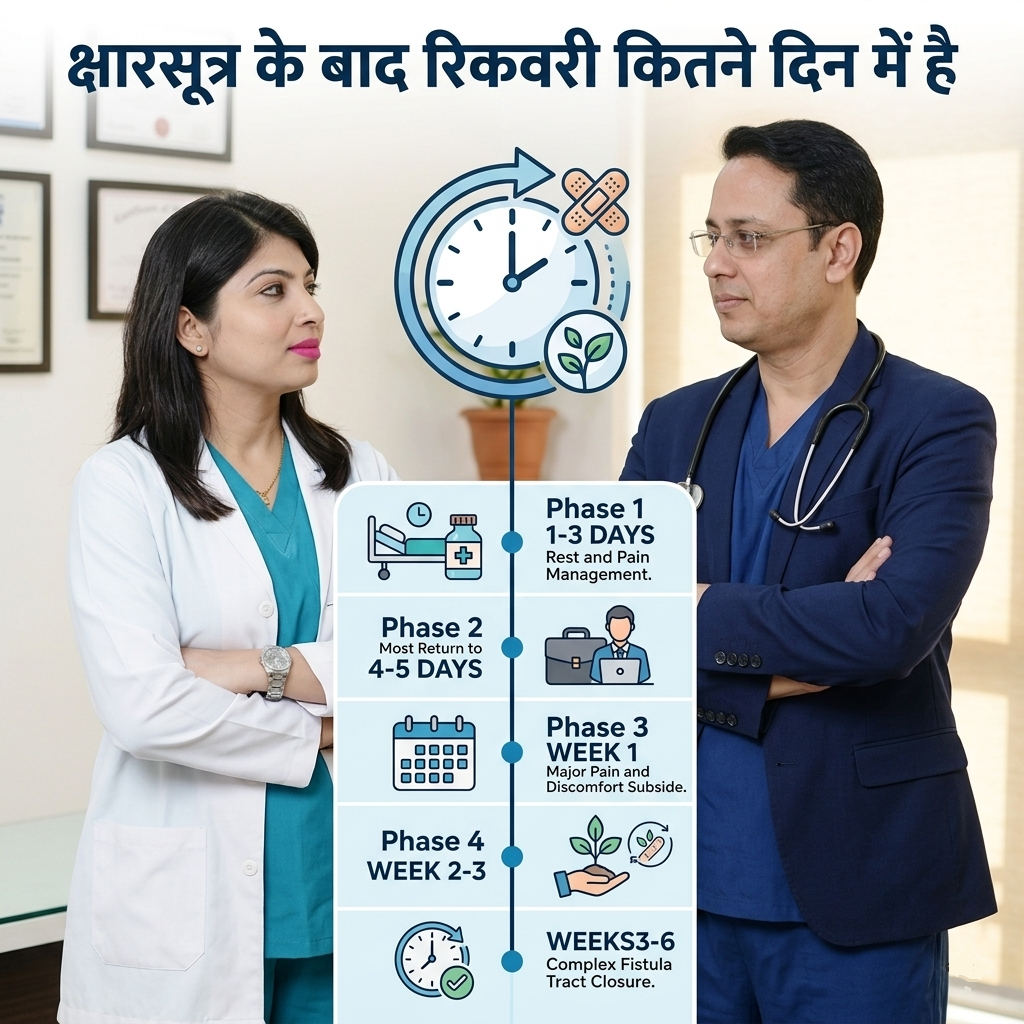
Minimal Disruption to Daily Routine: There are no extended, debilitating periods of strict bed rest. Most patients comfortably resume light, everyday office work within 24 to 48 hours.
-
True Root-Cause Elimination: The alkaline action systematically dissolves the thick, infected chronic granulation tissue linings that antibiotics fail to penetrate, completely cleansing the wound bed from within.
The Crucial Role of Diet and Ahar-Vihar in Recovery
At Arogyam Piles Clinic and Research Center, we firmly emphasize that anorectal conditions are fundamentally lifestyle and digestive disorders. Medication alone cannot compensate for poor dietary routines. The root cause typically traces back to chronic digestive weakness (Mandagni) leading to hard, dry stools.
To support your healing journey, our medical team prescribes tailored dietary adjustments:
What to Expect at Arogyam Piles Clinic: Your Journey to Recovery
When you trust your care to the best piles specialist doctor in chandigarh mohali, your recovery process is systematically managed to ensure complete comfort and transparency:
-
Comprehensive Assessment: Dr. Vinay Kumar conducts a detailed, private physical examination (using proctoscopy where appropriate) to accurately evaluate the stage, grade, or complexity of the condition.
-
Personalized Care Plan: We design a customized treatment roadmap combining lifestyle changes, internal herbal formulations, and Ksharsutra therapy if indicated.
-
Day-Care Medical Procedure: The medicated thread is placed with precision under strict sterilization, following modern day-care standards.
-
Convenient Weekly Follow-Ups: The thread is safely changed in a quick, virtually painless OPD session every week until the tract is entirely resolved.
-
Post-Treatment Preventive Guidance: We empower you with ongoing dietary counseling to keep your digestion strong, ensuring the problem never returns.
Don’t let pain control your life. Schedule a private consultation at Arogyam Piles Clinic and Research Center today, and experience true, lasting relief.
Patient Corner: Frequently Asked Questions (FAQs)
Q1: Is Ksharsutra treatment painful?
A: The initial placement is performed under appropriate local or regional anesthesia, making the procedure itself painless. Patients may experience a mild, manageable aching or burning sensation for a few hours post-procedure as the alkaline medicines interact with the tissue. This is easily managed with prescribed herbal sitz baths and mild natural analgesics.
Q2: How many days does it take to heal completely?
A: The duration depends on the length and depth of the tract or the size of the hemorrhoidal mass. Generally, a fistulous tract heals at a rate of roughly 1 cm per week. Dr. Vinay Kumar will provide an estimated timeline during your initial evaluation.
Q3: Can I drive or sit during the treatment period?
A: Yes. Unlike conventional surgery, sitting or walking is not restricted. We advise avoiding long, continuous long-distance driving or sitting on hard surfaces for extended intervals during the initial few days. Using a specialized hollow donut cushion provides excellent comfort.
Clinic Contact Details
-
Clinic Name: Arogyam Piles Clinic and Research Center
-
Chief Consultant: Dr. Vinay Kumar (B.A.M.S., C.K.S., Anorectal Surgeon)
-
Mohali Center Address: SCF 38, 2nd Floor (Above Longia Sweets), Desumajra Bus Stop, Chandigarh-Kharar Highway, Sector 125, Greater Mohali, Punjab – 140301
-
Phone Number: +91 96467 64444
-
Official Website: www.arogyampilesclinic.com