
In the fast-paced world of the modern food service industry, efficiency is not just an advantage—it is a necessity. Whether you are running a bustling restaurant, a large-scale catering business, or a rapidly growing cloud kitchen, the demand for high-quality, consistent food is constant. Among the various staples in Indian cuisine, the roti (or chapati) stands out as the most popular yet labor-intensive item to produce.
Manual production of rotis—kneading, rolling, and cooking—is time-consuming, prone to inconsistency, and heavily reliant on skilled labor. This is where a commercial roti maker machine transforms the game. By automating the production line, businesses can significantly reduce operational costs, maintain uniform quality, and scale their operations to meet even the highest demand.
In this comprehensive guide, we will explore why investing in an automatic chapati machine is the most strategic move for your kitchen, how to choose the right one for your specific needs, and how this technology guarantees a high return on investment (ROI).
The Strategic Importance of Kitchen Automation
For many restaurant owners and caterers, the kitchen is the heart of the business. However, when the “heart” is bogged down by repetitive manual tasks like rolling hundreds of chapatis, productivity takes a hit. Automating roti production provides several strategic advantages:
1. Unmatched Production Speed
In the restaurant industry, peak hours—like lunch and dinner rushes—are predictable but brutal. During these windows, throughput is everything. An automatic commercial roti maker machine can produce anywhere from 500 to over 3,000 rotis per hour, depending on the model. This level of output is physically impossible to achieve manually without a large team of specialized staff.
2. Consistent Quality and Uniformity
One of the biggest complaints in a food service environment is inconsistency. Customers expect the same thickness, roundness, and softness every time they order. Manual labor inevitably leads to variations; some rotis might be too thick, others burnt, and many irregularly shaped. A machine-made roti is pressed to a precise thickness and cooked at a controlled temperature, ensuring every single piece is identical, which builds immense customer trust and brand loyalty.
3. Dramatic Reduction in Labor Costs
Labor is one of the highest overhead costs in the food industry. By automating the roti production process, you reduce the dependency on skilled personnel for repetitive tasks. A single operator can manage a high-capacity machine, freeing up your trained chefs to focus on higher-value activities like menu innovation, presentation, and complex dish preparation.
4. Superior Hygiene and Food Safety
Modern health regulations are stringent, and consumers are more conscious of hygiene than ever before. Traditional roti preparation involves significant direct contact between the chef’s hands and the dough. An automatic chapati machine minimizes human touchpoints, drastically reducing the risk of contamination. Furthermore, these machines are constructed using high-quality, food-grade stainless steel, which is easy to sanitize and compliant with food safety standards.
Choosing the Right Commercial Roti Maker Machine
Not every machine is built for every business. The “best” machine is the one that aligns perfectly with your production volume, kitchen layout, and long-term business goals. Before you make a purchase, consider these key factors:
Determine Your Production Capacity
You must calculate your peak hour demand, not just your daily average. If you need 1,000 rotis for dinner, you cannot afford a machine that barely manages 500 rotis per hour, as it would require too much lead time.
-
Entry-Level (500–800 rotis/hr): Ideal for small restaurants, snack bars, and start-up cloud kitchens.
-
Mid-Range (1,000–1,500 rotis/hr): The most common choice for medium restaurants, event caterers, and busy tiffin services.
-
High-Capacity (2,000–3,000+ rotis/hr): Essential for banquet halls, large industrial canteens, and institutional catering.
Manual vs. Semi-Automatic vs. Fully Automatic
-
Manual/Semi-Automatic: These require an operator to handle the dough ball feeding or specific pressing stages. They are lower in price and maintenance but rely more on human labor.
-
Fully Automatic: These handle the entire process—from dough feeding (in some models) to pressing, cooking, and stacking. If your goal is to minimize staff, this is the gold standard.
Build Quality and Material
Commercial equipment undergoes heavy usage. Look for machines built with food-grade stainless steel. Avoid models with excessive plastic components in the cooking zone, as they will degrade quickly under heat. A robust frame not only ensures longevity but also keeps the machine stable during continuous operation.
Customization and Flexibility
Ensure the machine allows you to adjust key parameters:
-
Roti Diameter: Can you switch between small pulkas and larger roomali rotis?
-
Thickness: Can you adjust the pressure settings to change the thickness?
-
Cooking Temperature: Precise heat control is vital for getting that perfect “puff” without burning the surface.
After-Sales Support and Maintenance
A machine is only as good as the service behind it. Always buy from a reputable manufacturer that offers:
-
Local Service Networks: You cannot afford long downtimes waiting for a technician from another state.
-
Spare Parts Availability: Ensure that common parts like belts and heating elements are easily sourced.
-
Warranty: A standard commercial warranty is a sign of a manufacturer’s confidence in their product.
Financial Analysis: Is the Investment Worth It?
While the initial price of an automatic chapati machine might seem significant, it is a classic case of short-term cost versus long-term gain.
Calculating ROI
To understand the value, look at the “Cost per Roti.” Factor in:
-
Labor Savings: How many man-hours does the machine save per shift? Multiply this by your hourly wage.
-
Waste Reduction: Machines reduce the amount of dough thrown away due to irregular shapes or cooking errors.
-
Increased Sales: Can you take on more bulk orders now that you have the capacity? The ability to fulfill large catering orders can alone pay for the machine in just a few months.
In many commercial food setups, a well-chosen roti machine pays for itself within 6 to 12 months through labor savings and increased throughput alone.
Maintenance: Keeping Your Machine Running at Peak Performance
To maximize the lifespan of your commercial roti maker, follow these simple maintenance habits:
-
Daily Cleaning: Always clean the belts and cooking surfaces after every shift. Food residue can accumulate and cause uneven cooking or hygiene issues.
-
Scheduled Inspections: Periodically check the belt tension, heating elements, and motor functions.
-
Follow the Manufacturer’s Manual: Adhere to the specific oiling and cleaning instructions provided by the manufacturer.
Conclusion
The transition from manual labor to machine automation is a major milestone for any food business. Investing in a commercial roti maker machine is not just about upgrading your equipment; it is about upgrading your entire business model. You gain the ability to serve more customers, maintain impeccable quality, and focus your energy on what truly matters: growing your brand.
If you are ready to stop worrying about roti production and start focusing on your business expansion, explore the models available today, assess your needs, and take the step toward a more efficient, profitable, and automated kitchen.
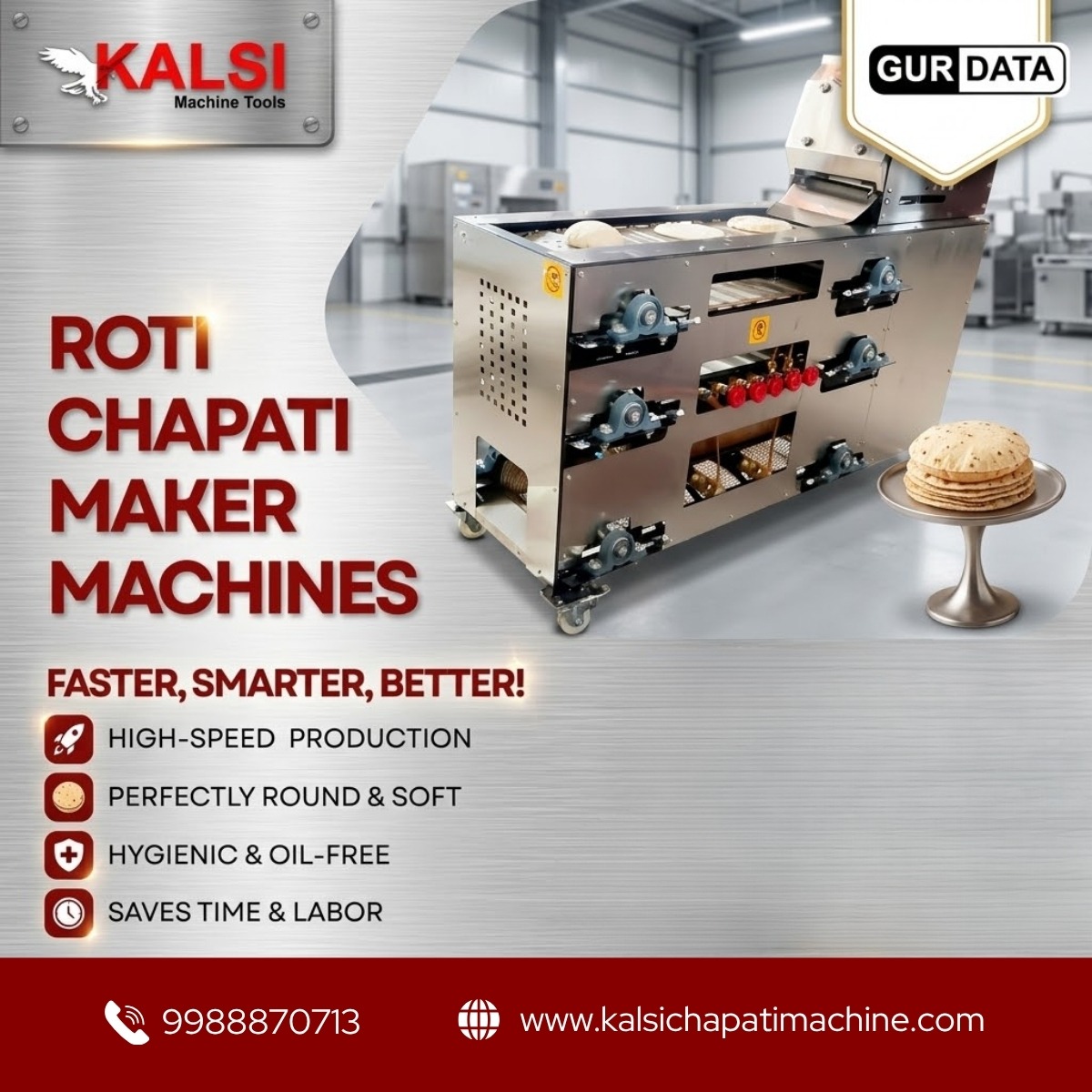
Need Expert Advice on Selecting Your Machine?
Every food business is unique, and our team is here to help you match the right machine to your production volume.
📞 Contact us today at: [Insert Your Phone Number]
🌐 Browse our latest models: www.kalsichapatimachine.com
Frequently Asked Questions (FAQs)
Q1: How much does a commercial roti maker cost?
A: Prices vary based on capacity and automation level. Entry-level machines may start around ₹50,000, while high-capacity, fully automatic systems can go upwards of ₹2,50,000–₹3,00,000.
Q2: Is it difficult to operate these machines?
A: Not at all. Most modern commercial roti machines are designed for ease of use. After a brief training session, your kitchen staff will be able to operate the controls confidently.
Q3: Can these machines make different types of rotis?
A: Yes, most models allow for adjustments in thickness and size. Some advanced models are even versatile enough to handle slightly different dough consistencies, though it is always best to check with the manufacturer regarding your specific recipe.
Q4: Will I still need a skilled chef?
A: You will still need chefs for cooking, flavor, and menu development. The machine simply handles the repetitive physical labor, allowing your chefs to focus on higher-value culinary tasks.