
Are you running digital ad campaigns on Google or Meta and noticing that traditional detailed audience targeting isn’t delivering the same return on investment (ROI) it used to? The digital advertising landscape has undergone a major shift. With ad platforms fully automating targeting and bidding through artificial intelligence, creative led growth in paid ads has emerged as the single most critical factor determining performance and profitability.
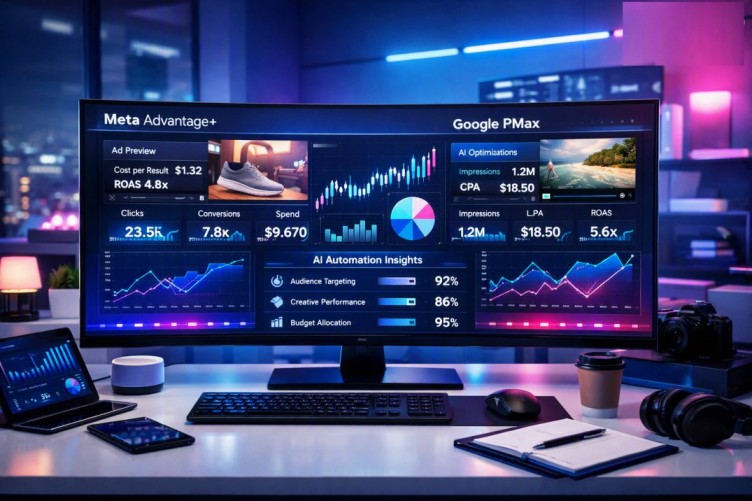
At WindowIT, a digital marketing and IT training institute, we continuously analyze search and paid media trends to ensure businesses and marketers stay ahead of industry changes. Today, algorithmic automation systems like Google’s Performance Max (PMax) and Meta’s Advantage+ Shopping and Catalog Campaigns have redefined campaign management. When AI algorithms take control of audience matching, placement distribution, and real-time bidding, your ad creative—its images, hooks, video storytelling, and persuasive copy—becomes your primary leverage point.
In this comprehensive guide, WindowIT explores how algorithmic advertising works, why ad creatives function as the new targeting mechanism, and how you can build a high-converting creative engine to scale your business predictably.
The Automation Revolution: Google PMax and Meta Advantage+
For years, media buyers spent hours building manual target audiences, tweaking age demographics, interests, behaviors, and custom lookalikes. However, privacy updates, third-party cookie restrictions, and rapid advancements in machine learning forced ad networks to evolve.
┌─────────────────────────────────────────────────────────────────┐
│              The Shift in Paid Media Strategy                  │
└────────────────────────────────┬────────────────────────────────┘
                                 │
       ┌─────────────────────────┼─────────────────────────┐
       ▼                         ▼                         ▼
┌──────────────┐          ┌──────────────┐          ┌──────────────┐
│ Legacy Era   │          │ Algorithmic  │          │ New Priority │
│ (Manual)     │          │ Automation   │          │ (Creative)   │
├──────────────┤          ├──────────────┤          ├──────────────┤
│ • Micro-     │          │ • Broad      │          │ • Multi-Angle│
│   Targeting  │          │   Targeting  │          │   Hooks      │
│ • Manual     │ ───────► │ • AI Bidding │ ───────► │ • High-Volume│
│   Bids       │          │ • Machine    │          │   Variations │
│ • Static     │          │   Learning   │          │ • User-Intent│
│   Graphics   │          │   Matching   │          │   Focus      │
└──────────────┘          └──────────────┘          └──────────────┘
When you deploy creative led growth in paid ads, you align directly with how modern ad algorithms operate:
1. Algorithmic Bidding and Automated Placements
Google PMax broadcasts your assets across Search, YouTube, Display, Discover, Maps, and Gmail using a single unified goal. Similarly, Meta Advantage+ dynamically tests your assets across Feed, Stories, Reels, and Audience Network, allocating budget automatically to the best-performing combinations.
2. Broad Targeting and Algorithmic Matching
Instead of forcing the platform to look only within a narrow interest group (such as “Digital Marketing Students in Chandigarh”), modern AI algorithms start broad. The platform analyzes your ad’s visual assets, spoken audio script, and ad copy to determine who reacts positively, using real-time engagement data to find your ideal customer base.
Why Ad Creative Is the New Audience Targeting
Because AI platforms automate delivery, your creative now acts as the filter that attracts relevant prospects while repelling non-buyers. If your creative is generic or weak, the algorithm struggle to find high-converting signals.
                         THE CREATIVE FILTER ENGINE
                                     │
      ┌──────────────────────────────┼──────────────────────────────┐
      ▼                              ▼                              ▼
┌──────────────┐              ┌──────────────┐              ┌──────────────┐
│ Visual Hook  │              │ Core Message │              │ Call-To-     │
│ (0-3 Sec)    │              │ & Angles     │              │ Action (CTA) │
├──────────────┤              ├──────────────┤              ├──────────────┤
│ • Stops the  │ ───────────► │ • Solves a   │ ───────────► │ • Directs    │
│   Scroll     │              │   Problem    │              │   Qualified  │
│ • Identifies │              │ • Demonstrates│             │   Traffic to │
│   Audience   │              │   Value      │              │   Landing Page│
└──────────────┘              └──────────────┘              └──────────────┘
Adopting creative led growth in paid ads allows your campaigns to stand out across multiple key dimensions:
-
Creative Diversity Over Minor Tweaks: Testing ten slightly different colors of the same graphic no longer works. High-performing accounts test distinct core angles, such as problem-solution, social proof, founder stories, and feature breakdowns.
-
Algorithmic Signal Generation: When an ad explicitly addresses a specific audience need in the first 3 seconds, users interested in that topic stop scrolling. This view duration gives the algorithm a strong signal to show the ad to similar profiles.
-
Longer Campaign Lifespans: High creative variation prevents “ad fatigue.” Rotating multiple visual formats helps lower your Cost Per Acquisition (CPA) and sustain performance over extended periods.
Building a High-Converting Creative Engine: Step-by-Step
To achieve sustainable success with creative led growth in paid ads, businesses need a repeatable workflow for generating, testing, and scaling creative assets. At WindowIT, we recommend following a structured four-stage process:
Step 1: Research and Customer Intent Mapping
Before filming video clips or writing ad text, identify your primary audience segments, their pain points, and top buying objections. Categorize these into distinct messaging pillars.
Step 2: Developing High-Impact Hooks and Messaging Angles
The first three seconds of a video or the top line of text determine scroll-stop rates. Draft 3 to 5 distinct hooks for every core script:
-
Negative Hook: “Stop wasting your budget on manual ad targeting in 2026…”
-
Result Hook: “How we lowered lead costs by 40% using AI-driven creatives…”
-
Question Hook: “Is your business struggling to scale Google PMax campaigns?”
Step 3: Diversifying Asset Formats
Avoid relying on a single visual media format. Supply AI platforms with a full mix of ad creative assets:
-
User-Generated Content (UGC): Authentic, phone-shot video testimonials and product demonstrations.
-
High-Production Motion Graphics: Clean corporate explainers and animated infographics.
-
Static Image Cards: Single-image graphics featuring bold typography, high-contrast visual cues, and key offers.
-
Long-Form Scripted Video: Detailed walkthroughs addressing objections directly.
Step 4: Rapid Testing and Performance Scaling
Group your creatives into dedicated testing structures within Meta Advantage+ or Google PMax. Monitor core performance indicators like Scroll-Stop Rate (3-second video views ÷ impressions), Click-Through Rate (CTR), and Return on Ad Spend (ROAS). Scale budgets into winning asset groups while replacing fatigued assets weekly.
Comparing Old Paid Ad Methods vs. Creative-Led Growth
Evaluating your current setup against modern standards highlights the advantages of upgrading your paid media strategy:
| Campaign Element | Legacy Paid Ad Strategy | Creative Led Growth Strategy (WindowIT Framework) |
| Primary Focus | Manual audience targeting & interest overlaps | High-volume creative strategy & messaging diversity |
| Platform Trust | High restriction, manual bid caps | Automated AI bidding (Google PMax & Meta Advantage+) |
| Ad Asset Strategy | 1–2 static images running for months | Continuous batch testing of hooks, UGC, and motion graphics |
| Scaling Driver | Increasing budget on narrow audience segments | Feeding algorithms new creative hooks to reach broad audiences |
| Optimization KPI | Cost Per Click (CPC) & CPM focus | Scroll-Stop Rate, CTR, CPA, and overall Campaign ROAS |
How WindowIT Helps You Master Algorithmic Digital Marketing
Whether you want to upgrade your internal marketing capabilities or train your team to execute data-driven campaigns, WindowIT delivers hands-on, practical training tailored to modern digital marketing requirements.
-
Advanced Paid Media Training: Learn how to build, optimize, and scale Google PMax, Meta Advantage+, and multi-channel marketing funnels from scratch.
-
Creative Strategy & Copywriting Modules: Master hook creation, scriptwriting, UGC strategy, and visual ad asset structuring.
-
Data-Driven Analytics: Understand conversion tracking setup, Google Analytics 4 (GA4), and server-side tracking to supply clean data signals to AI advertising algorithms.
-
Live Campaign Experience: Work on practical ad accounts and learn how to manage budgets, diagnose ad fatigue, and scale campaigns efficiently.
Frequently Asked Questions (FAQs)
Q1. What is creative led growth in paid ads?
Creative led growth in paid ads is a marketing strategy where ad creatives (videos, images, hooks, and copy) serve as the primary driver of targeting, engagement, and conversions, leveraging AI automation platforms like Google PMax and Meta Advantage+.
Q2. Why is audience targeting less important now in Meta and Google Ads?
Ad platform algorithms use advanced machine learning to analyze user behavior in real time. Broad targeting combined with strong creative assets enables platforms to find potential customers more effectively than restrictive manual targeting settings.
Q3. How often should I refresh ad creatives in PMax and Advantage+ campaigns?
It depends on your daily ad spend and impression volume. Generally, refreshing creatives every 2 to 4 weeks prevents ad fatigue, keeps your click-through rates high, and stabilizes acquisition costs.
Q4. What types of creative assets work best for Meta Advantage+ campaigns?
A balanced mix of short-form vertical videos (Reels/Stories), authentic user-generated content (UGC), high-contrast static images, and multi-product carousel ads delivers optimal performance across diverse ad placements.
Q5. Can small businesses with limited budgets adopt creative led growth?
Yes! Creative led growth does not require expensive production equipment. Authentic, clear, mobile-shot videos that address customer pain points often outperform high-budget agency commercials on automated ad networks.
Scale Your Paid Campaigns with WindowIT Today
Ready to transform your advertising performance and master modern digital marketing strategies? Partner with WindowIT to acquire the skills, insights, and frameworks needed to dominate today’s AI-driven advertising landscape.