
Living with the chronic discomfort of piles (hemorrhoids) can turn simple daily activities into a struggle. Whether it’s the sharp pain during bowel movements, persistent itching, or the sight of blood in the toilet, the physical and emotional toll is significant. Many patients wait too long to seek help, often searching for a “cure piles in 3 days” or trying home remedies that only mask the symptoms.
At Arogyam Piles Clinic, we believe that no one should live in silence with this condition. With advancements in medical science, particularly the rise of laser treatment for piles, achieving a permanent and painless recovery is more accessible than ever. In this comprehensive guide, we will explore everything you need to know about piles, from identifying the early stages to choosing the right treatment.
What are Piles? A Deep Dive into the Condition
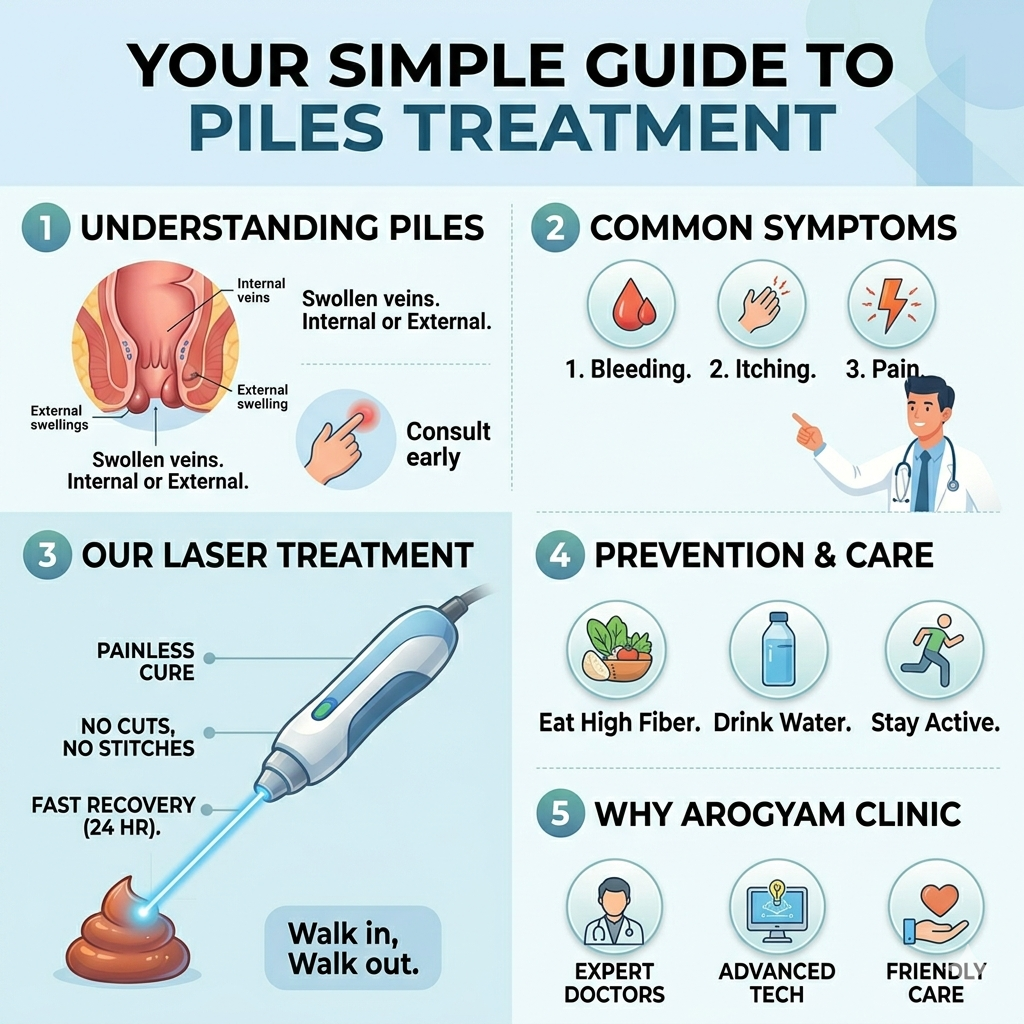
Piles, medically known as hemorrhoids, are essentially swollen veins located in the lower rectum and anus. Think of them like varicose veins in the legs, but in a much more sensitive area. When the walls of these blood vessels stretch, they become irritated, especially during the passage of stool.
The Anatomy: Internal vs. External
It is vital to distinguish between the two primary types of piles to understand your treatment options:
-
Internal Piles: These occur deep inside the rectum. Because there are fewer pain-sensing nerves in that area, they are usually painless. The first sign is often bright red blood on the tissue or in the bowl. However, if an internal pile prolapses (protrudes through the anal opening), it can cause significant irritation.
-
External Piles: These develop under the skin around the anus. This area is rich in nerves, meaning external piles are often the source of intense pain. If a blood clot forms inside an external pile (a thrombosed hemorrhoid), it can result in a hard, purple lump that requires immediate medical attention.
The Four Grades of Piles: Where Do You Stand?
Doctors categorize the severity of piles into four distinct stages. Identifying your stage is the first step our specialists take at Arogyam Piles Clinic:
-
Grade 1: Small inflammations inside the lining of the anus. They are not visible from the outside and generally don’t cause much pain, though they may bleed.
-
Grade 2: Larger than Grade 1, these may be pushed out during a bowel movement but return inside the anus spontaneously afterward.
-
Grade 3: Also known as “prolapsed hemorrhoids,” these appear outside the anus and must be manually pushed back in by the patient.
-
Grade 4: These are permanently prolapsed and cannot be pushed back inside. They are often large and extremely painful, making laser treatment for piles the most viable option.
Common Symptoms You Should Not Ignore
Recognizing the symptoms early can prevent the condition from progressing to Grade 4. Many patients mistake piles for other conditions like anal fissures or fistulas, which is why a professional diagnosis is crucial.
-
Rectal Bleeding: Painless bleeding during bowel movements is the most common sign.
-
Anal Itching and Irritation: Caused by mucus discharge from the swollen veins, which can irritate the sensitive skin around the anus.
-
Pain and Discomfort: This is a hallmark of external or thrombosed piles.
-
Lumps around the Anus: These can be sensitive or painful to the touch and may indicate a clot.
-
Feeling of Incomplete Bowel Movement: A sensation that your bowels aren’t quite empty, often leading to more straining (which worsens the condition).
Why Do Piles Occur? Root Causes and Risk Factors
The primary cause of piles is increased pressure in the lower rectum. This pressure causes the veins to stretch and bulge. While anyone can develop them, certain lifestyle factors increase the risk:
-
Chronic Constipation or Diarrhea: Straining during bowel movements is a leading cause.
-
Low-Fiber Diet: A lack of fruits, vegetables, and whole grains leads to hard stools that are difficult to pass.
-
Sedentary Lifestyle: Sitting for long periods, especially on the toilet (which is common in the age of smartphones), increases pressure on the anal veins.
-
Pregnancy: Hormonal changes and the physical weight of the fetus put immense pressure on the pelvic floor.
-
Obesity: Excess body weight puts additional strain on the rectal area and often correlates with a low-fiber diet.
-
Heavy Lifting: Regularly lifting heavy objects can increase abdominal pressure, contributing to the formation of piles.
The Evolution of Treatment: Why Laser is the Future
For years, patients feared piles treatment because of the painful “open surgery” recovery process, which involved incisions, stitches, and weeks of bed rest. However, modern technology has changed the patient experience entirely.
1. Conservative Management
For Grade 1 piles, we often recommend a high-fiber diet, increased water intake (3-4 liters a day), and “Sitz baths” (soaking in warm water for 15 minutes). While these help manage symptoms, they are rarely a permanent cure for advanced stages.
2. Kshar Sutra Treatment (The Ayurvedic Approach)
As a leading piles clinic in Panchkula and Chandigarh, we offer Kshar Sutra—an Ayurvedic para-surgical technique. It involves a medicated thread that is tied around the base of the hemorrhoid. The thread gradually cuts through the tissue while simultaneously healing it. This is highly effective for patients who prefer traditional Indian medicine.
3. Laser Treatment for Piles (The Gold Standard)
Today, laser treatment for piles is the most preferred option globally. Here is why:
-
How it works: A high-precision laser fiber is inserted into the hemorrhoidal mass. The energy from the laser seals the blood vessels, causing the pile to shrink and eventually disappear.
-
No Cuts, No Stitches: Because there are no incisions, there is zero to minimal bleeding.
-
Minimal Post-Op Pain: Most patients describe the post-operative feeling as “mild discomfort” rather than the sharp pain associated with traditional surgery.
-
Fast Recovery: Most patients are discharged the same day (Day Care Procedure) and can return to light work within 48 to 72 hours.
-
Safety: There is a much lower risk of infection or complications compared to open surgery.
Laser Surgery vs. Traditional Surgery: A Comparison
| Feature | Traditional Surgery | Laser Treatment |
| Pain Level | High (requires pain meds for weeks) | Minimal to Low |
| Recovery Time | 2–4 Weeks | 2–3 Days |
| Hospital Stay | 2–3 Days | Same-Day Discharge |
| Incision/Cuts | Large incisions made | No cuts or stitches |
| Recurrence Rate | Moderate | Very Low |
The Recovery Process: What to Expect
One of the biggest concerns patients have is what happens after the procedure. At Arogyam Piles Clinic, we provide a structured recovery plan:
-
Immediate Post-Op: You will rest in our recovery room for a few hours. Most patients feel well enough to walk shortly after.
-
First 24 Hours: You are encouraged to rest at home and stick to a liquid or very soft diet to ensure your first bowel movement is easy.
-
Returning to Routine: By day three, most patients are back to their normal office routine. We advise avoiding heavy lifting for at least two weeks.
-
Long-Term Follow-Up: We schedule follow-up appointments to monitor healing and ensure that the lifestyle changes are being implemented to prevent recurrence.
The Piles Prevention Diet: Keeping it Away for Good
To ensure the success of your laser treatment for piles, you must maintain a healthy digestive system. Surgery removes the existing piles, but a poor diet can cause new ones to form over time.
-
Fiber is Your Best Friend: Aim for 25–35 grams of fiber daily. Include oats, lentils, beans, broccoli, and papaya.
-
Hydrate Constantly: Water acts as a natural lubricant. Without enough water, fiber can actually cause constipation.
-
Stay Active: Regular walking or yoga improves blood circulation and stimulates the natural contraction of the intestines.
-
The “Toilet Rule”: Do not spend more than 5 minutes on the toilet. If nothing happens, leave and try again later. Straining is the biggest enemy of your rectal health.
Why Choose Arogyam Piles Clinic for Your Recovery?
Choosing the right piles clinic in Panchkula or Chandigarh is a decision that affects your long-term health. Arogyam Piles Clinic stands out because:
-
Proctology Specialists: Our doctors have years of specialized experience in treating anorectal disorders specifically.
-
Compassionate Care: We understand that this is a sensitive issue. Our staff is trained to provide a discreet and comfortable environment.
-
State-of-the-Art Technology: We use the latest diode laser systems to ensure the highest precision and safety for our patients.
-
Holistic Approach: We don’t just treat the symptoms; we treat the patient. Our guidance on diet, exercise, and mental well-being ensures a holistic recovery.
Frequently Asked Questions (FAQs)
Is laser treatment for piles permanent?
Yes. By cauterizing the blood supply to the hemorrhoidal tissue, the laser ensures the pile shrinks and dies off. When combined with the dietary changes we recommend, the recurrence rate is extremely low.
Is the procedure covered by insurance?
Many health insurance providers now cover laser surgery for piles because it is a medically necessary procedure. Our administrative team can help you with the documentation needed for your claim.
Can I get rid of piles in one day?
Laser surgery is a “day-care” procedure. While the healing process takes a few days, the actual problem is addressed in a single session, allowing you to walk into the clinic and go home the same afternoon.
Does the treatment affect my daily life?
Only for a few days. Unlike traditional surgery where you might be bedridden for a week, laser patients are usually up and moving within 24 hours.
Conclusion: Take the First Step Toward a Pain-Free Life
Piles are a common medical condition, not a cause for shame. In fact, nearly 50% of adults will experience them at some point. Delaying treatment only leads to complications like chronic anemia or strangulated hemorrhoids.
If you are looking for a painless piles cure and want to consult with experts who prioritize your comfort and long-term health, Arogyam Piles Clinic is here to help. Stop searching for temporary fixes and choose a permanent solution that lets you live life to the fullest.