
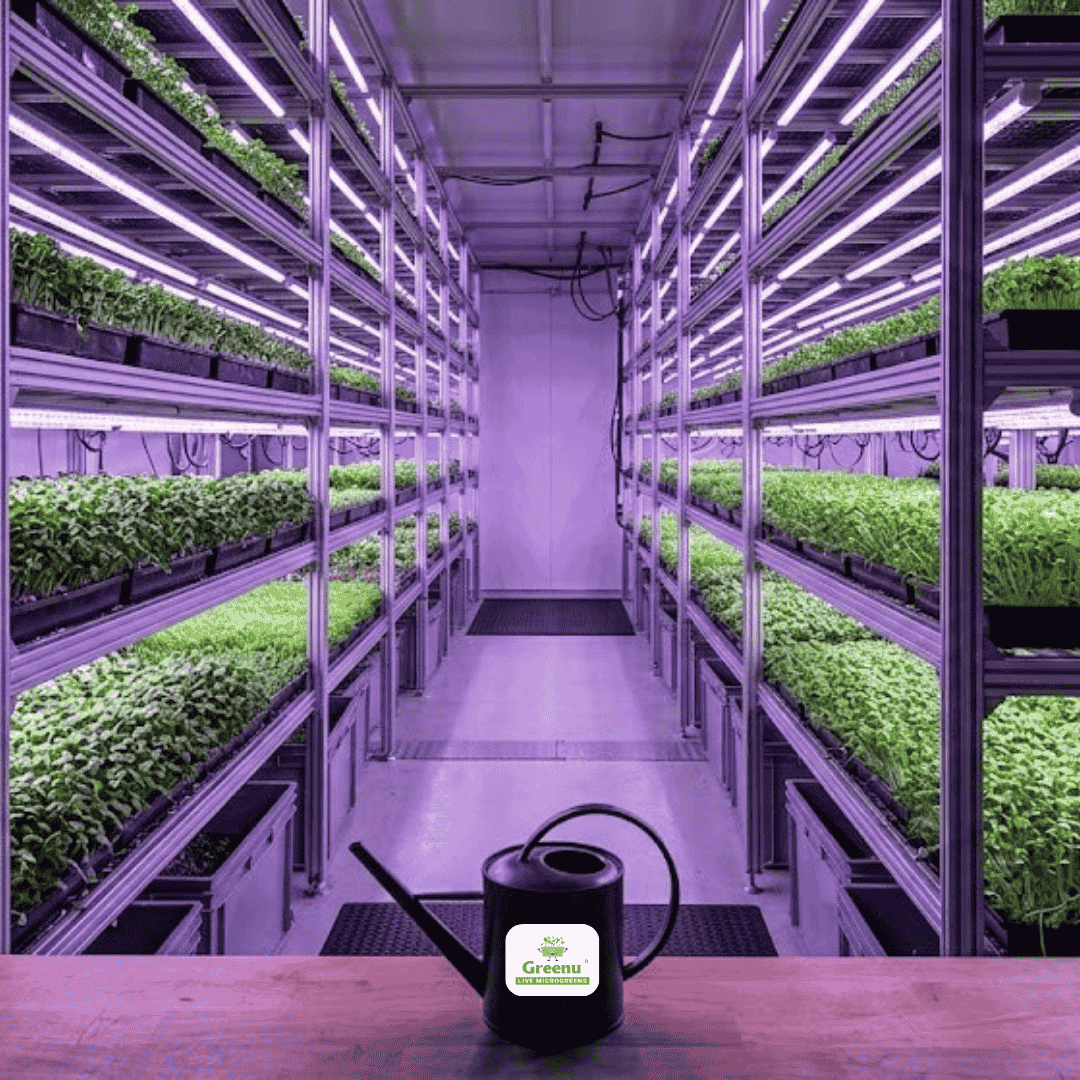
In the rapidly evolving landscape of 2026, the intersection of technology and wellness has birthed a new agricultural hero: the microgreen. As urban centers like Delhi, Bangalore, and Mohali face increasing land scarcity and a growing “wellness economy,” the demand for nutrient-dense superfoods that can be grown in “zero-acre” environments has skyrocketed.
For the modern entrepreneur, microgreens represent more than just a culinary trend; they are a high-margin, fast-turnover business opportunity that aligns perfectly with the “Startup India” ethos. At Greenu.in, we have seen a 300% increase in searches for indoor gardening kits and organic microgreen seeds, signaling a permanent shift in how India thinks about food security and nutrition.
Understanding the Microgreens Market in 2026
The Indian microgreens market is projected to grow at a CAGR of 12.8% through 2026. This growth is fueled by two primary consumer segments:
-
The Health-Conscious Household: Families seeking chemical-free, “living food” to boost immunity.
-
The Gourmet HORECA Sector: High-end restaurants and cafes using “vegetable confetti” for both aesthetics and intense flavor profiles.
What makes 2026 different? It’s the year of Hyper-Localism. Consumers no longer want greens that have traveled 500 kilometers. They want greens grown within 10 kilometers of their plate. This is where your microgreens business plan comes into play.
Step 1: Choosing Your Growing Method – Soil vs. Hydroponics
One of the most searched topics on Greenu.in is whether to use traditional soil or modern hydroponics. In 2026, the choice depends on your scale and target market.
The Organic Soil/Cocopeat Path
For those targeting the “Organic & Natural” niche, using a medium like cocopeat or vermicompost is ideal.
-
Pros: Lower initial setup cost, better flavor profile (according to some chefs), and easier for beginners.
-
Cons: Higher risk of soil-borne pathogens and more manual labor in tray preparation.
The Hydroponic Revolution
Using AI-monitored hydroponics is the 2026 trend for scaling. By growing seeds on hemp mats or stainless steel mesh, you eliminate soil mess.
-
Pros: Extremely clean product (no need for heavy washing), faster growth cycles, and easy integration with automated vertical racks.
-
Cons: Higher initial investment in nutrient solutions and pH monitoring equipment.
Step 2: Essential Equipment for a 2026 Urban Farm
To build a professional-grade farm, you need more than just a windowsill. Your kit should include:
-
LED Grow Lights: Full-spectrum lights that mimic 2026 solar patterns for maximum phytonutrient density.
-
Ventilation Systems: High-efficiency fans to prevent “Damping Off” (mold), which is the #1 reason for crop failure.
-
Automated Irrigation: Smart timers that ensure your trays stay moist without waterlogging the roots.
-
Greenu Premium Seeds: Always use non-GMO, untreated seeds. Traditional vegetable seeds are often treated with fungicides that are unsafe at the microgreen harvest stage.
Step 3: Top 5 Most Profitable Varieties to Grow
Based on current 2026 search trends, these varieties offer the highest ROI:
| Variety | Harvest Time | Market Demand | Key Benefit |
| Broccoli | 8–10 Days | Extremely High | High Sulforaphane (Anti-cancer) |
| Radish (Sango) | 6–7 Days | Very High | Vibrant purple color & spicy kick |
| Sunflower | 10–12 Days | High | Nutty flavor, high protein |
| Purple Cabbage | 10–14 Days | High | Rich in Vitamin C & K |
| Pea Shoots | 12–15 Days | Medium | High yield, great for stir-fries |
Step 4: Marketing and Selling Your Microgreens Online
In 2026, a website is not enough. You need to leverage Quick-Commerce (Q-Commerce) and D2C (Direct-to-Consumer) strategies.
1. The Subscription Model
Create a “Weekly Wellness Box.” Customers in cities like Chandigarh or Mohali are now accustomed to subscription-based living. A ₹999/month subscription for 4 fresh trays of greens provides you with predictable recurring revenue.
2. Branding as “Living Food”
A major trend in 2026 is selling the microgreens with the roots attached. This extends shelf-life from 3 days to 14 days and ensures the vitamins are active until the second they are consumed. Use Greenu’s biodegradable packaging to emphasize your sustainability.
3. Local SEO and GEO Targeting
If you are based in Mohali, your SEO should focus on “Fresh Microgreens Mohali” or “Organic Salads Delhi NCR.” Google’s 2026 algorithm prioritizes “Near Me” results more than ever.
Step 5: Financials – Costs vs. Profits
A typical small-scale setup in a 10×10 room can hold 50–60 trays.
-
Cost per Tray: ~₹40 (Seeds + Medium + Electricity).
-
Selling Price per Tray: ₹150–₹250.
-
Monthly Profit Potential: With two cycles per month, a small room can generate a net profit of ₹15,000–₹20,000 as a side hustle. Scaled operations can easily reach 5x this amount.
Frequently Asked Questions (FAQ)
Are microgreens just baby sprouts?
No. Sprouts are grown in water and the entire plant (including the seed and root) is eaten. Microgreens are grown in a medium, require light, and only the stem and leaves are harvested. This makes microgreens safer and more nutrient-dense.
Can I grow microgreens in an AC room?
Yes! In fact, microgreens thrive in controlled environments between 18°C and 24°C. This makes them perfect for indoor urban farming in India’s hot climate.
Do I need a license to sell microgreens in India?
If you are selling commercially, you should register for a basic FSSAI license. It is a simple process that builds massive trust with your corporate and retail clients.
Conclusion: The Future is Green
The “Green Startup Revolution” is here. By combining the high-quality supplies from Greenu.in with a smart urban farming India strategy, you are not just growing plants—you are growing a sustainable future. Whether you are a student, a homemaker, or a budding entrepreneur, microgreens offer the most accessible entry point into the world of Agri-Tech.
Would you like to start your journey? Browse our 2026 Starter Kits and get your first harvest ready in just 10 days!