
In the modern pursuit of glowing, glass-like skin, it is easy to fall into the seductive trap of thinking that more is always better. We all love that immediate post-exfoliation brightness, the feeling of “scrubbing away” imperfections. However, this aggressive approach can quickly turn against you. If you have been feeling persistent tightness, constant stinging, chronic redness, or unexpected sensitivity lately, you are not dealing with a phase; you are likely facing the consequences of an over-processed complexion. If you are struggling to repair a damaged skin barrier from over-exfoliation, you have come to the right place.
Your skin barrier—the outermost layer of your skin that acts as a essential protective shield—is a sophisticated, yet delicate system. When pushed too hard with aggressive chemical acids, harsh physical scrubs, daily exfoliating tools, and multiple anti-aging products, that shield cracks and crumbles. This failure allows vital moisture to escape while simultaneously letting environmental irritants penetrate deeply. The resulting state is one of chronic inflammation and discomfort. At Esthetica Cosmetology, we see these symptoms frequently, and we specialize in guiding patients through the systematic recovery process. The good news is that with patience and a science-backed, personalized protocol, your skin can return to a healthy, resilient, and beautiful state.
Recognizing the Signs of a Compromised Skin Barrier
Before you can effectively treat any condition, you must correctly identify it. The process to repair a damaged skin barrier from over-exfoliation begins with a crucial self-diagnosis. Your skin communicates its distress very clearly. Here are the most common warning signs:
1. Persistent and Sudden Redness
Healthy skin manages temperature and emotion-induced flushing quickly. Compromised skin, however, exhibits a persistent pink, raw, or angry look without any obvious trigger. This “permanent flush” indicates the underlying tissues are in a constant state of inflammation.
2. Chronic Dehydration and Tightness
You may apply a heavy moisturizer, only to find that within an hour, your skin feels taut and dry again. This is a classic sign of Transepidermal Water Loss (TEWL). It often creates a “crinkled paper” texture, making fine lines and wrinkles appear significantly more pronounced.
3. Increased Sensitivity and Reactivity
This is perhaps the most frustrating symptom. Products that were previously staples in your routine—your favorite moisturizer, your gentle cleanser—suddenly cause an intense stinging or burning sensation upon contact. Your skin’s nerve endings are essentially exposed, making it reactive to almost everything.
4. Breakouts That Won’t Quit
When your protective shield is down, bacteria, pollution, and dirt can penetrate your pores more easily. Simultaneously, your skin produces excess sebum (oil) to compensate for the dryness. This combination creates the perfect storm for unexpected, deeply inflamed acne flare-ups that seem resistant to typical spot treatments.
5. Flaky and Rough Texture
The natural exfoliation process is disrupted when the barrier is damaged. Dead skin cells cling to the surface instead of shedding smoothly, leading to a visible, rough, and flaky texture. Many people incorrectly respond to this by exfoliating more, which severely exacerbates the damage.
The Science of the Damage: The ‘Brick and Mortar’ Analogy
To understand how to fix the problem, it helps to visualize what has happened at a cellular level. Dermatologists often use the “brick and mortar” model for the stratum corneum (the skin barrier).
-
The Bricks: Corneocytes (flattened, dead skin cells).
-
The Mortar: A vital blend of lipids, primarily Ceramides, Cholesterol, and Fatty Acids.
Healthy, resilient skin keeps these bricks tightly cemented. Over-exfoliation acts like a power sander, wearing down the “bricks” and washing away the “mortar.” As the fats are stripped away, the skin becomes porous, leading to excessive water loss and a complete loss of environmental protection. Understanding this structural failure is fundamental when you are trying to repair a damaged skin barrier from over-exfoliation. You aren’t just calming surface redness; you are physically rebuilding a vital protective structure.
The Step-by-Step Path to Barrier Recovery
Recovery requires patience, a complete halt to aggressive actives, and a focus on nutrient-rich protection. This systematic approach will restore your skin’s defense system.
1. The “Less is More” Rule (The Immediate Stop)
Immediately cease all active exfoliants. This must be non-negotiable. Stop all forms of chemical acids (AHAs like Glycolic and Lactic acid; BHAs like Salicylic acid; PHAs), physical scrubs, cleansing brushes, home microdermabrasion tools, and all forms of Vitamin A derivatives (Retinol, Retinoids). Your skin needs a vacation from “active” cellular turnover for at least 2 to 4 weeks—or until all symptoms of sensitivity have completely resolved.
2. Simplify Your Skincare Routine to the Bare Essentials
Your complex 7-step routine is likely a major contributor to the current damage. To repair a damaged skin barrier from over-exfoliation, you need to return to a fundamental, 3-step morning and evening regimen:
-
Morning (AM) Routine:
-
Gentle Cleanser: Use only a very mild, non-foaming, pH-balanced cleanser. In the severe early stages of damage, you may find that simply rinsing with cool water is best.
-
Barrier-Repair Serum: Apply a lightweight, alcohol-free serum that contains hydrating and healing ingredients (like Hyaluronic Acid, Panthenol, or Centella).
-
Simple Moisturizer: Lock in hydration with a straightforward, fragrance-free moisturizer.
-
Mineral Sunscreen: Use a gentle, physical (Zinc or Titanium Dioxide) formula. This is vital, as damaged skin is intensely vulnerable to UV light.
-
-
Evening (PM) Routine:
-
Gentle Cleanser: A vital step to remove dirt and environmental pollution.
-
Barrier-Repair Serum: Same as above.
-
Heavier Night Cream: Look for a richer, more occlusive cream. Your skin undergoes maximum repair at night, making this the best time to physically barrier your skin with ceramides.
-
3. Seek Key “Barrier-Repair” Ingredients
Focus your search on products that mimic your skin’s natural composition to physically patch the cracks. The gold standard includes:
-
Ceramides: These are non-negotiable. They physically replace the lipid mortar.
-
Hyaluronic Acid: A humectant that can hold 1,000 times its weight in water, vital for combating TEWL. Apply to damp skin for maximum effect.
-
Panthenol (Vitamin B5): A powerful anti-inflammatory and humectant that promotes skin regeneration.
-
Centella Asiatica (Cica): Renowned for its unparalleled calming and healing abilities on raw or sensitized skin.
-
Squalane or Shea Butter: These provide necessary occlusivity (the physical seal) to prevent moisture from escaping.
Dietary and Lifestyle Tips to Support Repair
While your internal systems prioritize overall health, you can support your skin from the inside out:
-
Hydrate Constantly: Drink plenty of water throughout the day.
-
Omega Fatty Acids: Incorporate healthy fats (like flaxseeds, walnuts, and salmon), which are the building blocks of skin lipids.
-
Cool Water: Avoid hot showers and harsh winds. Use only lukewarm or cool water on your face.
Frequently Asked Questions (FAQs) About Barrier Repair
Q: How long does it take to repair a damaged skin barrier from over-exfoliation?
A: Depending on the severity of the damage, the repair process typically takes between 2 to 6 weeks. Consistently avoiding all active ingredients and maintaining a simplified, hydrating routine are the most critical factors for accelerated healing.
Q: What is the fastest way to fix a compromised skin barrier?
A: There are no instant fixes. However, the most efficient protocol is to stop all active ingredients (Retinol, Vitamin C, Acids) immediately, focus solely on gentle hydration (Ceramides, Hyaluronic Acid), and protect your skin daily with a mineral sunscreen. Professional medical hydrations like a HydraFacial can sometimes give the process a significant jump-start.
Q: Can I use Vitamin C when my skin barrier is damaged?
A: No. It is highly recommended that you pause all potent actives, including high concentrations of Vitamin C (especially L-Ascorbic Acid) until your skin has fully healed and no longer feels any stinging, rawness, or dryness. Reintroduce it very slowly once the barrier is resilient.
Why Choose Esthetica Cosmetology for Your Skin Recovery?
At Esthetica Cosmetology, we understand that damaged skin is more than a superficial concern—it is a condition that impacts your confidence. If your skin remains inflamed, itchy, or painful after two weeks of a simplified routine, it is essential that you seek professional guidance. We specialize in skin rejuvenation and targeted barrier repair, ensuring you receive a precise, medical-grade recovery plan that restores your health safely and effectively, preventing long-term damage or chronic sensitivity.
Your skin is a living, breathing organ that fundamentally knows how to heal itself—it just needs the right, supportive environment and patience. By stepping back, subtracting aggressive treatments, and focusing on gentle, protective, and nutrient-rich care, you can restore that radiant, healthy, and resilient look you love.
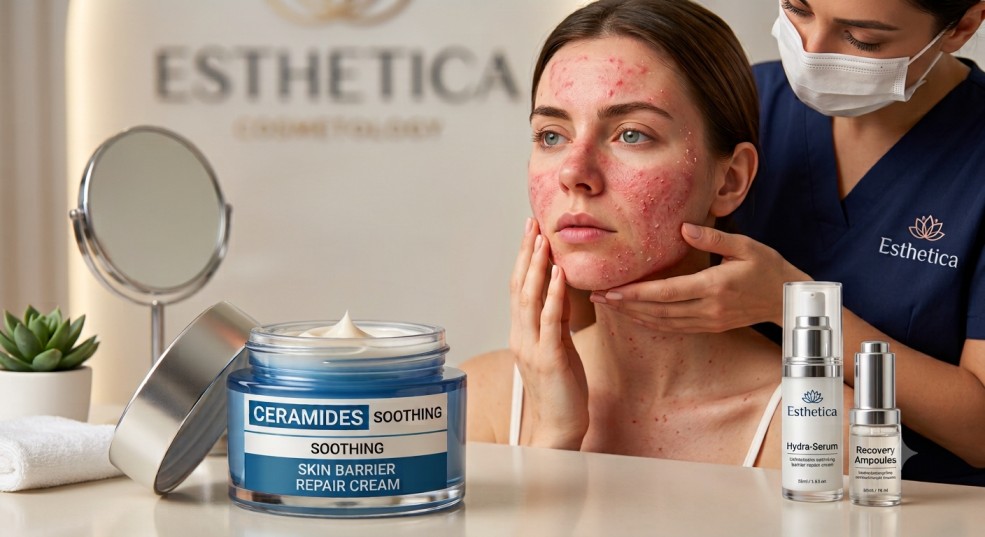
Ready to get your skin back on track? If you need professional advice, a personalized skin analysis, or a soothing, restorative treatment like our HydraFacial to help your skin heal faster, book a consultation at Esthetica Cosmetology today.
📍 Address: SCF 61, First Floor, Phase-11, Sector 65, Mohali 📞 Phone: 8968668821 🌐 Website: www.estheticacosmetology.com