
The wait is finally over. As of 8:00 AM on May 4, 2026, the counting of votes has officially begun for the high-stakes assembly elections in West Bengal, Tamil Nadu, Kerala, Assam, and Puducherry. What started as a high-voltage campaign season has culminated in a morning of intense suspense, with early trends suggesting a fundamental shift in India’s regional political landscape.
In this deep dive, we explore the state-by-state breakdowns, the “celebrity factors,” and what these results mean for the future of Indian democracy.
West Bengal: A Saffron Surge in the East?
West Bengal remains the most watched battleground of this cycle. In a state where the Trinamool Congress (TMC) has long held sway, early trends indicate a neck-and-neck race that has stunned observers.
The BJP Crosses the Halfway Mark
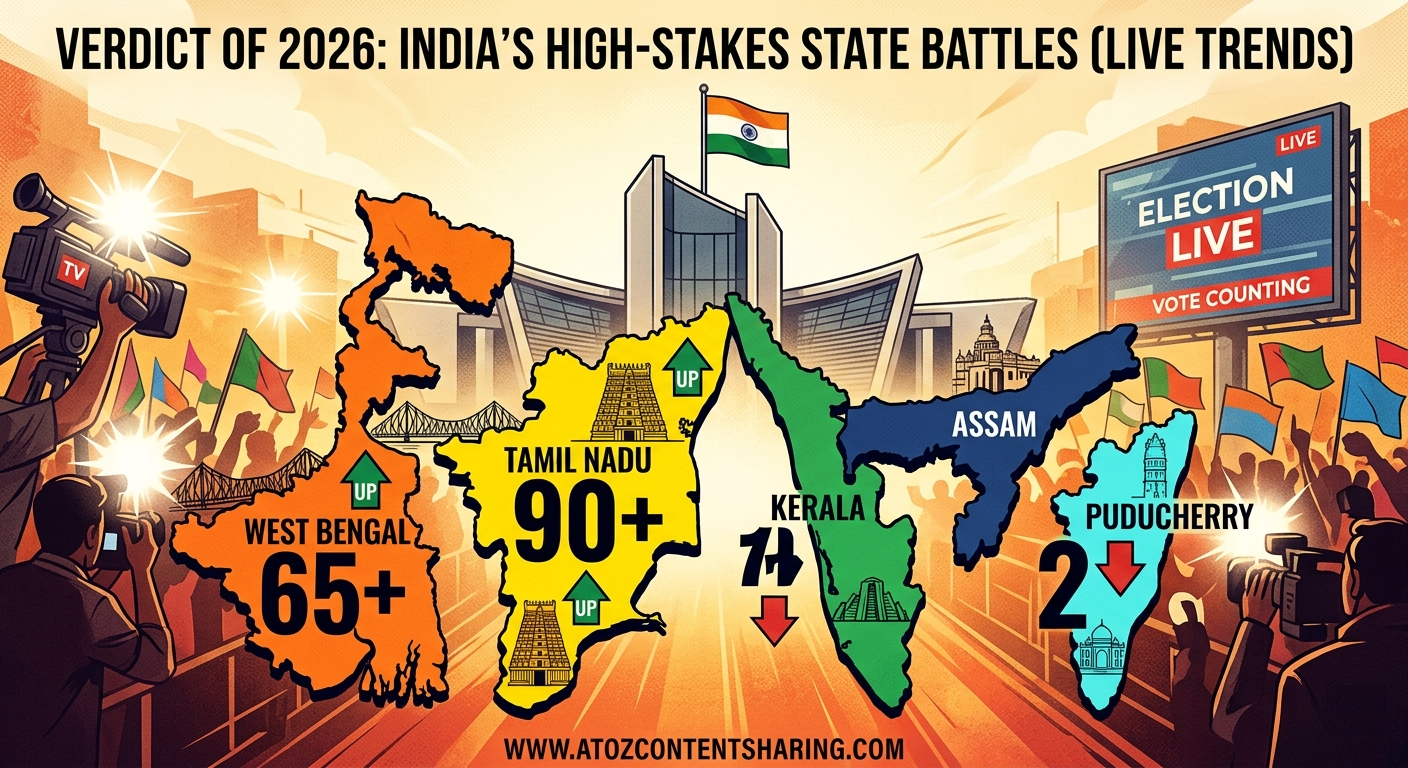
Early reports from the Election Commission of India (ECI) show the BJP has crossed the halfway mark in leads. This marks a massive departure from previous years, where the TMC held a comfortable cushion. As of mid-morning, the BJP led in 68 constituencies compared to the TMC’s 39.
The Social Impact on Voting
Analysts point toward deep-seated social issues as the catalyst for this shift. One of the most poignant moments of this campaign is the lead held by Ratna Debnath, the mother of the RG Kar Medical College victim, who is contesting from the Panihati seat on a BJP ticket. Her lead is seen by many as a protest vote against the incumbent administration’s handling of local justice and safety.
Tamil Nadu: The “Vijay Tsunami” and the End of Duopoly
Perhaps the biggest story of the 2026 elections is coming from the South. The traditional bipolar contest between the DMK and AIADMK has been completely disrupted by the entry of actor-turned-politician C. Joseph Vijay and his party, Tamilaga Vettri Kazhagam (TVK).
A Political Debut for the Ages
TVK has surged ahead of both major Dravidian parties in early leads. Supporters are already lining the streets, hailing Vijay as the next potential Chief Minister. TVK is currently leading in over 100 seats, crossing the halfway mark in early trends and dealing a significant blow to the ruling alliance.
Incumbent Struggles
The ruling DMK, which sought a second consecutive term, is currently trailing significantly. High-profile leaders, including Chief Minister M.K. Stalin in Kolathur and Minister Palanivel Thiaga Rajan in Madurai Central, are currently trailing behind TVK candidates. This signals a massive “anti-incumbency” wave coupled with a desire for a fresh, non-traditional political alternative.
Kerala: UDF Set for a Landslide?
Breaking away from the “incumbency” trend that favored the Left Democratic Front (LDF) in recent years, early trends from Kerala suggest a major comeback for the United Democratic Front (UDF).
Dominant Lead
The Congress-led UDF has already crossed the majority mark of 71 seats in early trends, leading in 99 constituencies. This would mark a historic return to power for the UDF if the trends hold.
The Left’s Struggles
For the first time in recent history, Chief Minister Pinarayi Vijayan and at least 14 of his cabinet colleagues are trailing in their respective constituencies. This suggests that the LDF’s “Kerala Model” may have faced significant fatigue among the electorate in 2026.
Assam: NDA Eyes a Historic Hat-Trick
In the Northeast, the Himanta Biswa Sarma-led NDA appears to be heading toward a commanding victory.
Commanding Numbers
The BJP-led NDA was leading in 74 constituencies by 10:30 AM, with its allies BPF and AGP leading in 9 and 7 seats respectively. The NDA is nearing the 100-seat mark in total leads, while the Congress (INC) remains a distant second with approximately 24 seats.
Puducherry: Stability Wins the Day
The Union Territory of Puducherry seems to be favoring stability. Early trends favor the NDA alliance (consisting of AINRC, BJP, AIADMK, and LJK). Incumbent Chief Minister N. Rangaswamy has already established a lead in his constituency by over 4,400 votes.
The National Implication: What Happens Next?
Today’s results are more than just regional tallies; they are a pulse-check for the nation.
-
The Expansion of the BJP: A potential victory in West Bengal would mark the BJP’s deeper penetration into regions that once resisted its “Hindi heartland” identity.
-
The Rise of Outsiders: The success of Vijay’s TVK in Tamil Nadu signals a growing appetite for new political faces beyond established dynasties.
-
Congress’ Survival: The UDF’s strong performance in Kerala provides a much-needed lifeline for the Congress as it seeks to rebuild its national image.
Frequently Asked Questions (FAQ)
Q: When will the final results be announced? A: While trends are clear by midday, the final official results are typically declared by the ECI by late evening once all rounds of EVM counting are completed.
Q: Can these leads change? A: Yes. Early leads reflect the first few rounds of counting. In close contests, the lead can “flip” several times before a winner is declared.
Q: What was the voter turnout for these elections? A: Voter turnout across these five regions remained high, with West Bengal and Kerala reporting figures above 75%, reflecting high democratic engagement.
Stay tuned to www.atozcontentsharing.com as we bring you live updates, seat-by-seat breakdowns, and expert analysis throughout the day!