
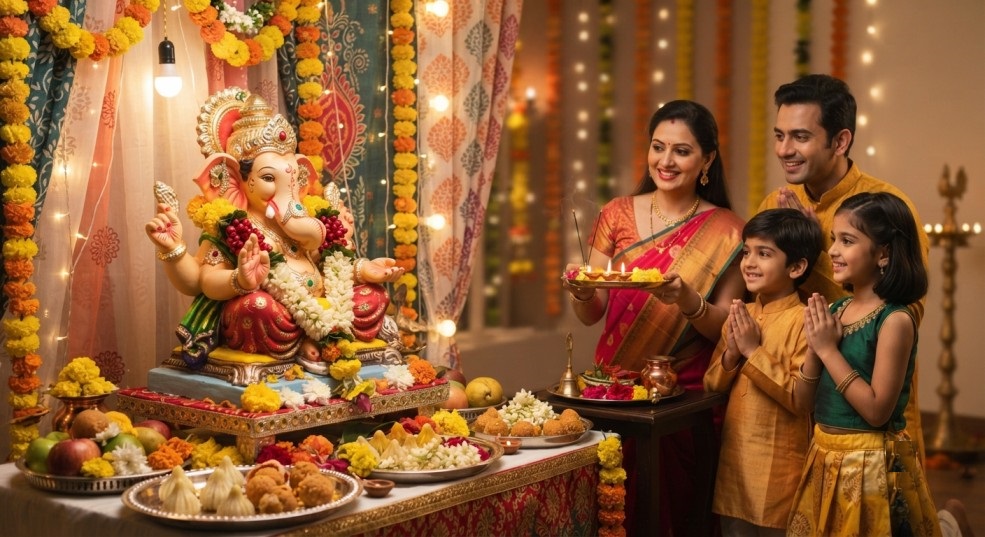
As the vibrant beats of dhol-tasha fill the crisp autumn air and joyous chants of “Ganpati Bappa Morya, Agasya Varshi Laukar Ya!” echo through bustling streets, homes and neighborhoods transform into sacred spaces of pure devotion. The festival of Ganesh Chaturthi celebrations marks one of the most spiritually significant and culturally unifying events in India. Dedicated to the birth of Lord Ganesha—the revered Vighnaharta (remover of obstacles) and the divine embodiment of wisdom, intellect, and new beginnings—this ten-day festival brings families, friends, and communities together in an extraordinary wave of festive joy.
Whether you are welcoming Bappa into your household for a day, a week, or participating in grand community pandals, understanding the deep-rooted history, rituals, and modern evolution of these festivities enriches the spiritual experience.
The Historical and Mythological Roots of Ganeshotsav
While family worship of Lord Ganesha has ancient origins dating back centuries, the grand public scale of Ganesh Chaturthi celebrations as we know them today was catalyzed by the legendary freedom fighter Lokmanya Tilak in the late 19th century. Recognizing the need to unite diverse sections of society against colonial rule during a time when public political gatherings were heavily restricted, Tilak transformed a private domestic ritual into a massive community festival (Sarvajanik Ganeshotsav).
This brilliant socio-political initiative provided an invaluable platform for education, cultural exchange, and patriotic awakening. Today, this rich legacy lives on, with communities across India and the global diaspora coming together to organize breathtaking public pandals, cultural programs, music recitals, and charitable blood-donation drives throughout the festival season.
Step-by-Step Guide to Ganesh Sthapana and Rituals
The commencement of the festival centers around Ganesh Sthapana, the ceremonial installation of Lord Ganesha’s idol. Executing these sacred rituals with mindfulness sets a harmonious, spiritual tone for the days ahead.
1. Choosing the Auspicious Muhurat
Consulting the traditional Hindu calendar to find the exact midday (Madhyahna) muhurat is essential for welcoming the deity. It is traditionally believed that Lord Ganesha was born during this specific afternoon timeframe.
2. Preparing the Altar (Mandap)
The home or community space is thoroughly cleaned, decorated with fresh mango leaves, banana stems, vibrant floral torans, and intricate, colorful rangolis at the entrance to invite positive energy and prosperity.
3. Pran Pratishtha and Shhodashopachara Puja
During the Pran Pratishtha ritual, sacred mantras are chanted to invoke the divine presence into the idol. This is followed by the Shhodashopachara Puja—sixteen distinct forms of homage, including offering vermilion (sindoor), fresh flowers, sacred Durva grass (beloved by Lord Ganesha), aromatic incense, and lit lamps.
The Culinary Delight: The Significance of Modak
No discussion of Ganesh Chaturthi celebrations is complete without highlighting the ultimate culinary offering associated with the deity: the sacred Modak. According to mythology, modaks are Lord Ganesha’s favorite sweet treat.
Traditionally, families prepare Ukadiche Modak—steamed rice flour dumplings stuffed with a rich, aromatic mixture of freshly grated coconut and jaggery flavored with cardamom and nutmeg. Beyond their delicious taste, modaks carry profound symbolic meaning: the outer covering represents the tough challenges of life or the physical body, while the sweet coconut filling inside symbolizes the ultimate bliss of spiritual realization and inner peace. Furthermore, preparing these sweets together fosters deep bonding among family members.
Transitioning Toward Sustainable and Eco-Friendly Traditions
In recent years, a wonderful and much-needed transformation has taken over Ganesh Chaturthi celebrations nationwide. Traditional materials like non-biodegradable plaster of Paris (PoP) and toxic chemical paints are rapidly being replaced by conscious alternatives that protect our planet.
-
Clay Idols (Shadu Mati): Opting for natural, unbaked river clay idols ensures that during immersion (Visarjan), the idol dissolves harmlessly back into the earth without harming aquatic ecosystems.
-
Plantable Seed Ganesha: An innovative trend involves idols embedded with plant seeds. When immersed in a pot of soil at home, the idol dissolves and sprouts into a lush green plant, symbolizing continuous growth, renewal, and life.
-
Natural Dyes and Decor: Using turmeric, sandalwood, and flower petals for decoration minimizes environmental impact while keeping ancient organic traditions alive.
Cultivating Unity, Community Harmony, and Social Welfare
Beyond individual devotion, Ganesh Chaturthi celebrations serve as a powerful catalyst for social harmony. In community pandals, people from all walks of life sit together to partake in evening aartis, cultural performances, and community meals (mahaprasad). Many organizing committees also utilize this platform to conduct noble social initiatives such as free health check-up camps, educational book distribution drives, and environmental awareness seminars. This community-centric approach reinforces the core values of compassion, sharing, and collective well-being that Lord Ganesha embodies.
Preparing for Anant Chaturdashi and Visarjan
The conclusion of the ten-day festival arrives on Anant Chaturdashi, marked by the emotional yet hopeful immersion ceremony known as Visarjan. Devotees bid farewell to Bappa with lively processions, singing hymns, and showering colored powder (gulal). The final farewell chant—“Ganpati Bappa Morya, Pudhchya Varshi Lavkar Ya” (Lord Ganesha, return soon next year)—reflects the profound belief that while the physical idol returns to the elements, the divine blessings, wisdom, and protective energy of Lord Ganesha remain enshrined in our hearts throughout the year.
Seeking Bappa’s Blessings for New Beginnings
Lord Ganesha is universally revered as Prathameshwar—the first deity to be invoked before embarking on any new journey, business venture, educational pursuit, or life milestone. As we immerse ourselves in the joyous energy of Ganesh Chaturthi celebrations, it is an ideal time to reflect on our personal and professional goals.
Let us pray for the wisdom to navigate challenges with grace, the patience to overcome obstacles, and the compassion to uplift those around us. May the divine presence of Bappa fill your home with infinite joy, robust health, and enduring prosperity.
Ganpati Bappa Morya, Mangal Murti Morya!
Frequently Asked Questions (FAQs)
What is the primary significance of Ganesh Chaturthi?
Ganesh Chaturthi commemorates the birth of Lord Ganesha, the remover of obstacles (Vighnaharta) and the god of wisdom, new beginnings, and intellect. It is a time for spiritual renewal, community bonding, and seeking divine blessings.
How long do Ganesh Chaturthi celebrations typically last?
The festival traditionally lasts for 10 days, culminating on Anant Chaturdashi. However, many households and communities choose to host Bappa for 1.5 days, 3 days, 5 days, or 7 days depending on family traditions and personal convenience.
Why is Durva grass offered to Lord Ganesha?
According to ancient mythology, offering twenty-one blades of fresh Durva (cynodon dactylon) grass helps appease Lord Ganesha, symbolizing purity, resilience, and the elimination of negative energies.
How can we celebrate Ganesh Chaturthi in an eco-friendly way?
You can make your celebrations sustainable by choosing unbaked clay (shadu mati) idols, using natural water-soluble colors, avoiding single-use plastics in pandal decorations, and performing the final immersion in a bucket at home rather than polluting natural water bodies.