
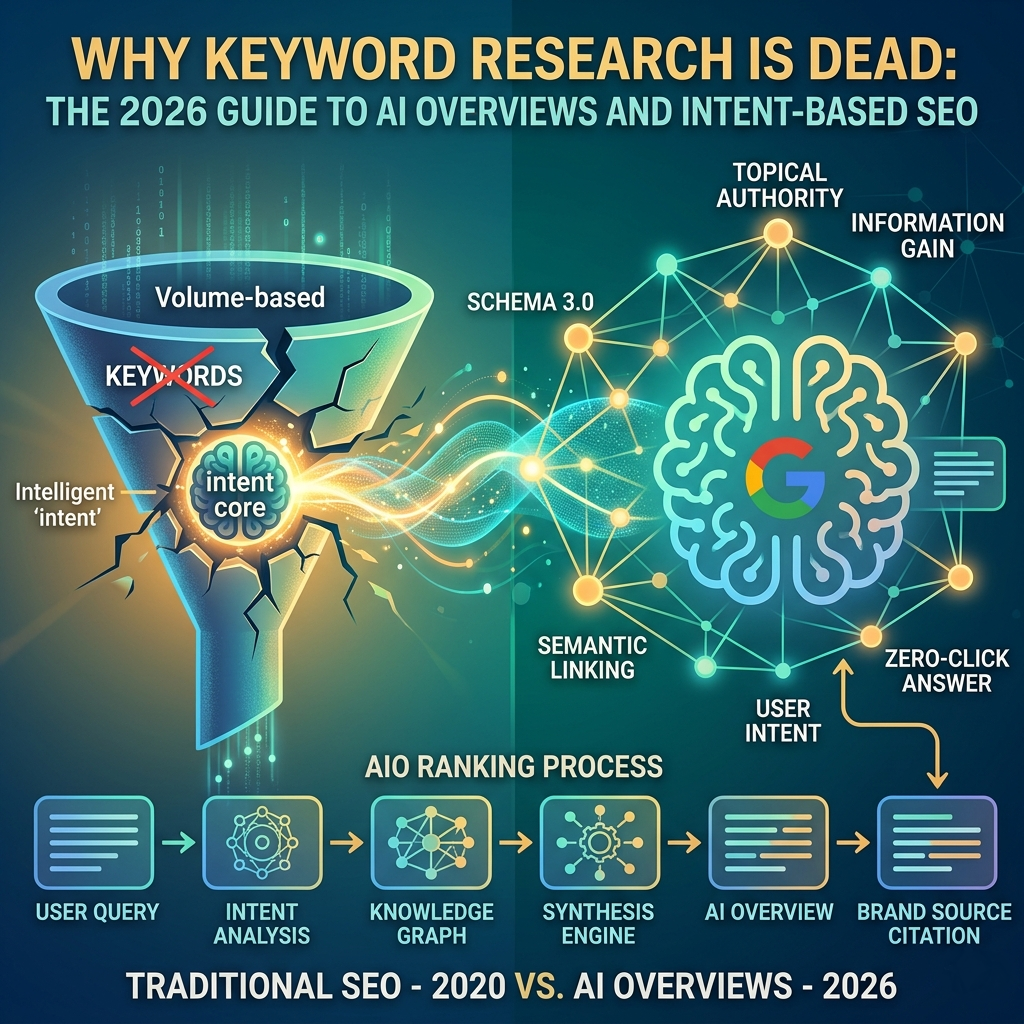
For over two decades, the “search and click” economy was the lifeblood of the internet. You found a high-volume keyword, sprinkled it across a 1,500-word article, and waited for the traffic to roll in. But as of April 2026, that era has officially ended. With the global rollout of advanced AI Overviews (AIO) and the rise of Generative Engine Optimization (GEO), the way users interact with Google has fundamentally shifted from “searching for websites” to “asking for answers.”
Today, top-of-funnel informational traffic is plummeting, with some niches seeing a 60% drop in organic clicks. If your strategy still relies on “Volume-based” keywords, you are chasing ghosts. In 2026, SEO is no longer about winning the click—it’s about becoming the source.
The Death of the “Volume” Metric
In 2026, a keyword having “10,000 monthly searches” is a vanity metric. Why? Because if that query triggers a comprehensive AI Overview, Google’s Gemini model will synthesize the answer right on the SERP (Search Engine Results Page). The user gets what they need without ever visiting a website. This is the Zero-Click Era.
Instead of chasing volume, successful digital marketers are now focusing on Information Gain and Search Intent. Google’s April 2026 Core Update specifically rewards content that provides “unique perspectives not found in the training data.” If your blog post is just a rehash of what 10 other sites say, the AI will summarize it, but it won’t cite you.
Moving from Keywords to Entities and Intent
To rank in AI Overviews, you must stop thinking about words and start thinking about Entities. An entity is a well-defined concept (a brand, a person, a specific technical process).
The Shift in Strategy:
-
Old Way: Targeting “best running shoes for flat feet” (Keyword focus).
-
2026 Way: Optimizing for the intent “correcting overpronation in marathon training” (Entity and Problem-solving focus).
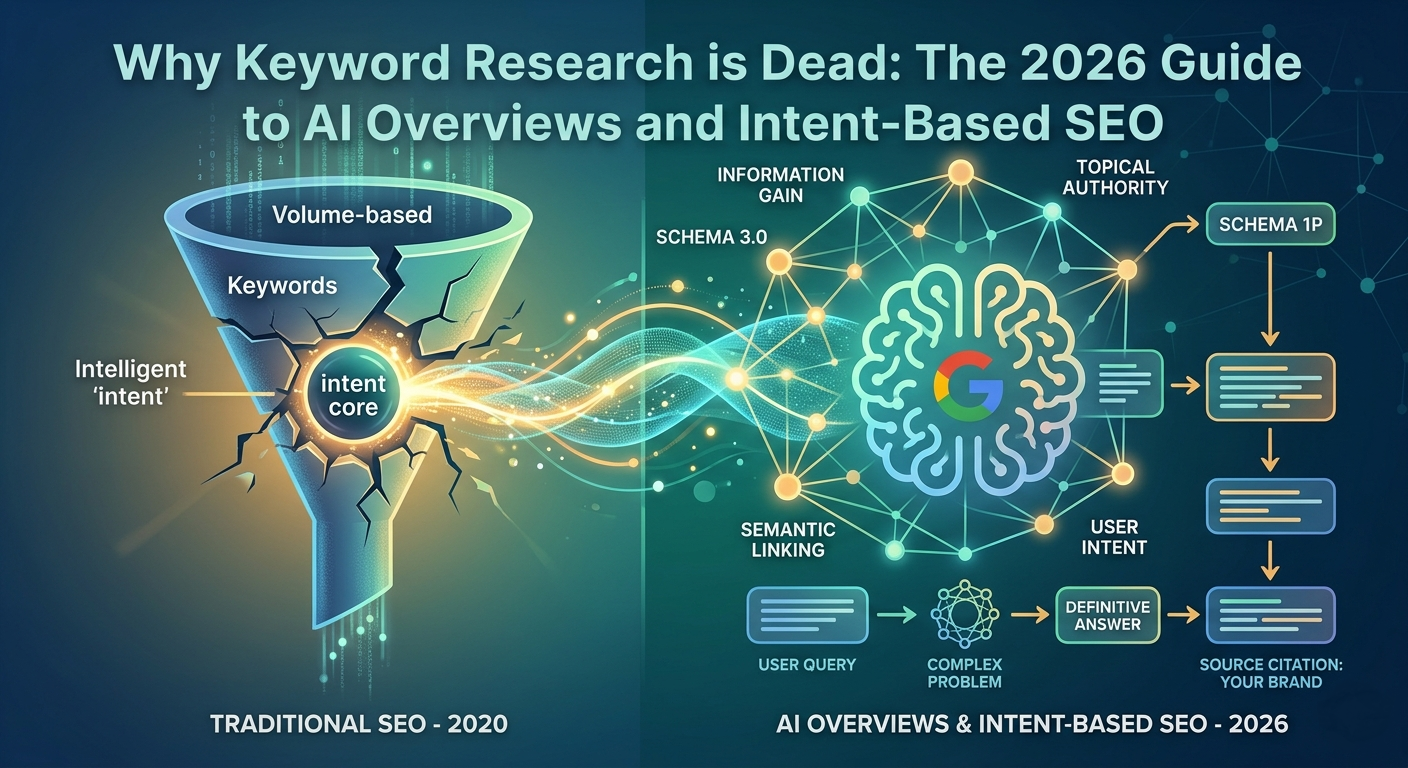
When you solve a specific problem or address a nuanced intent, you become a “high-leverage” source for the AI. Google’s algorithms now perform dozens of sub-searches simultaneously to build one AI Overview. To be included, your content needs to be the most authoritative “block” of information for one of those sub-queries.
How to Optimize for AI Overviews (AIO) and GEO
If you want to regain your organic visibility, you need to apply Generative Engine Optimization (GEO). Here is the blueprint for 2026:
1. The “Answer Block” Framework
AI models are “lazy”—they look for the most efficient way to extract an answer. Structure your articles so the most important information is served on a silver platter.
-
Direct Answer First: Start your sections with a concise, 2-3 sentence answer to the primary question.
-
The “Rule of 3”: Use bullet points, numbered lists, and comparison tables. AI Overviews love structured data because it’s easy to parse and display.
2. Information Gain: The “Anti-AI” Content
If a ChatGPT-style bot can write your article, it has zero Information Gain. To get cited by Google, you must include:
-
Original Data: Statistics from your own business or surveys.
-
First-Hand Experience (E-E-A-T): Personal anecdotes, case studies, and “I tried this” insights.
-
Contrarian Views: If the “consensus” is wrong, explain why. AI models look for “divergent high-quality data” to provide a balanced overview.
3. Semantic Linking and Topic Clusters
Isolated blog posts are dead. In 2026, Google evaluates your Topical Authority. You need to build a “Content Ecosystem.” If you are writing about “Digital Marketing in Punjab,” you shouldn’t just have one post. You need a cluster:
-
Pillar Page: The Ultimate Guide to Punjab Digital Marketing.
-
Sub-topics: SEO for Chandigarh Tech Startups, Social Media Trends in Ludhiana, and GEO strategies for local Amritsar businesses. Link these together using natural, descriptive anchor text. This tells the AI that you aren’t just a writer; you are a subject matter expert.
The Rise of GEO (Generative Engine Optimization)
GEO is the practice of making your brand “highly sourceable.” In 2026, being mentioned in an AI Overview as a recommended tool or expert is more valuable than being #1 in the blue links.
To boost your GEO score:
-
Cite Your Sources: Use outbound links to government data, academic papers, or high-authority news sites. This builds “trust by association.”
-
Optimize for Natural Language: Write how people talk. With the rise of voice search and conversational AI, queries are now 3x longer than they were in 2024.
-
Schema Markup 3.0: Ensure your technical SEO is flawless. Use
Speakableschema,Organizationschema, andFactCheckmarkup to help the AI verify your claims.
Measuring Success in 2026
If clicks are down, how do you know you’re winning? You must shift your KPIs (Key Performance Indicators).
-
Share of Model (SoM): How often is your brand cited in AI Overviews for your niche?
-
Brand Mentions: Are people (and AI) talking about you as an authority?
-
Conversion Quality: While “vanity traffic” is disappearing, the traffic that does click through from an AI Overview is highly qualified. These users have already read the summary and want a deep dive—they are much more likely to convert into leads.
Conclusion: Adapt or Fade Away
The “death” of keyword research isn’t a funeral; it’s a graduation. We are moving from a web of “strings” (keywords) to a web of “things” (entities and meanings). By focusing on Intent-based content and Information Gain, you can stop worrying about fluctuating click-through rates and start building a brand that Google’s AI must cite.
The future of SEO belongs to the experts, the researchers, and the truth-tellers. If you provide real value that an algorithm can’t replicate, you won’t just survive the AI transition—you will dominate it.
FAQ: Search Intent in 2026
Q: Does keyword volume still matter at all? A: Only for “Commercial” and “Transactional” intent. For “Informational” queries, volume is a poor indicator of potential traffic due to the prevalence of zero-click AI answers.
Q: Will AI Overviews replace all organic results? A: No. AI Overviews provide the “what” and the “how.” Users still click through for the “deep dive,” the community discussion, and the expert implementation.
Q: How often should I update my content for SEO in 2026? A: Freshness is a major signal for Gemini. Aim to update your “high-leverage” pages every 3-6 months with new data, updated statistics, and fresh expert quotes.