
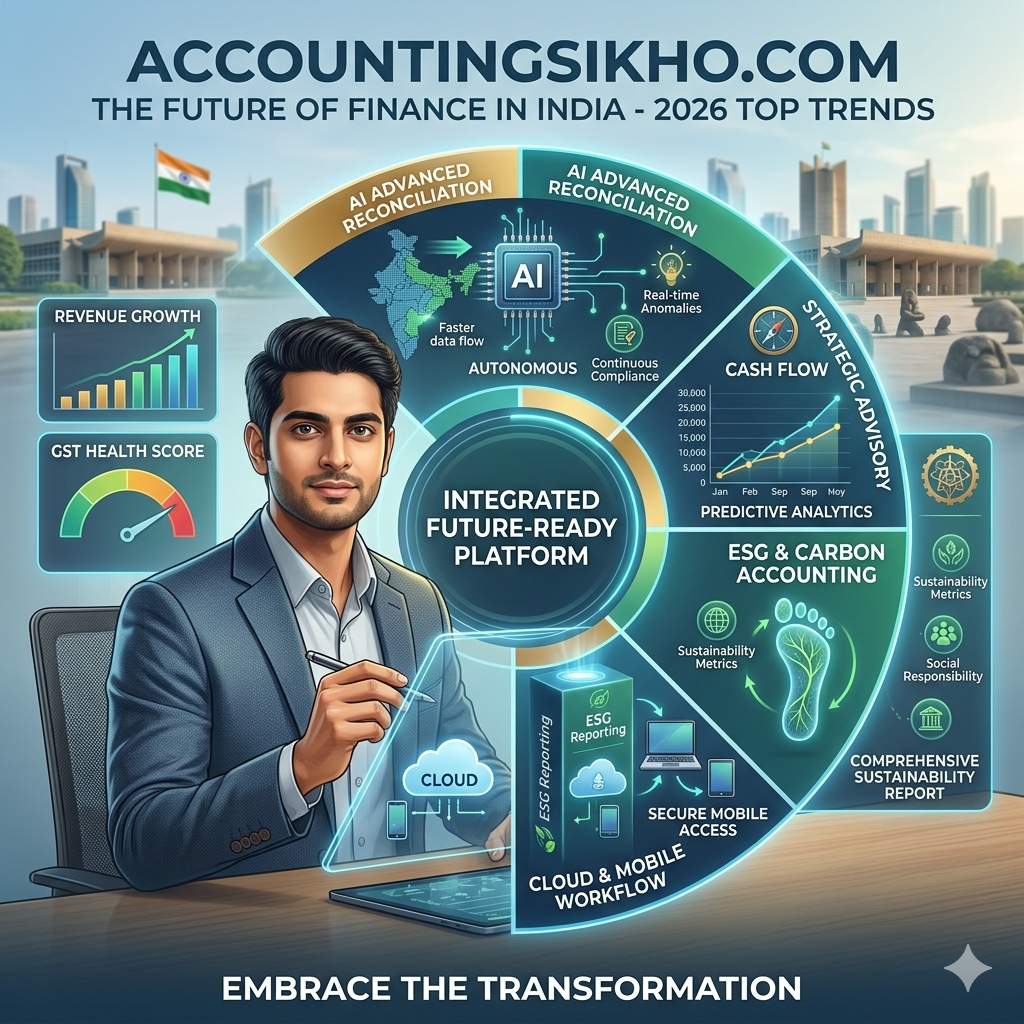
The accounting landscape in India is no longer just about tallying ledgers and filing tax returns. As we move through 2026, the future of finance in India is undergoing a seismic shift driven by rapid technological integration, evolving regulatory frameworks, and a demand for strategic decision-making. Whether you are a commerce student, a CA aspirant, or a seasoned professional, staying updated with these trending shifts is essential for career longevity.
In this blog, we explore the most searched and impactful accounting trends that are shaping the industry this year.
1. AI-Driven “Autonomous” Accounting
Artificial Intelligence has moved from being a luxury tool to a baseline requirement. In 2026, the focus has shifted toward “Autonomous Accounting.” This means software no longer just assists with data entry; it predicts and records journal entries based on historical patterns.
For Indian professionals, this means a significant reduction in time spent on bank reconciliations and invoice processing. AI-powered tools now flag anomalies in real-time, helping businesses catch fraud or clerical errors before the month-end close.
2. The Rise of Real-Time GST Compliance
Taxation in India has become almost entirely digital. With the government’s push for real-time reporting, accounting software like TallyPrime, Busy, and Zoho Books have integrated deep e-invoicing and e-way bill features.
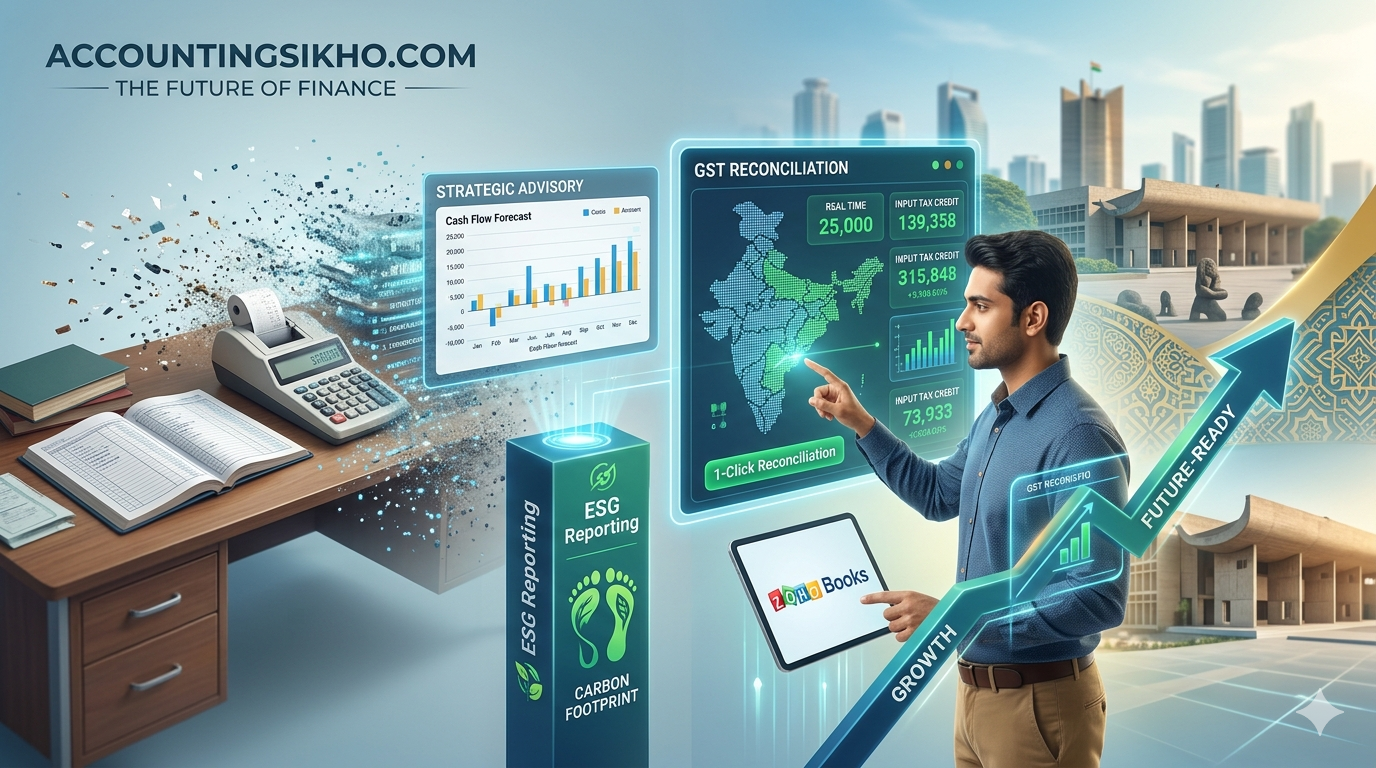
The future of finance in India revolves around “Continuous Compliance.” Instead of a mad rush at the end of the month, accountants are now performing “1-click reconciliations” and “live ITC (Input Tax Credit) tagging.” This ensures that businesses maintain a healthy GST health score, which is increasingly being used by banks to determine creditworthiness.
3. Transition from Bookkeepers to Strategic Advisors
The role of an accountant is being redefined. Since automation handles the “grunt work” of data extraction, firms are now looking for professionals who can provide Advisory Services.
Today’s finance professionals are expected to interpret complex data to tell a story. This includes:
-
Cash Flow Forecasting: Predicting liquidity issues before they happen.
-
Risk Management: Identifying financial threats in a volatile market.
-
Business Growth Planning: Using financial metrics to guide expansion strategies.
4. Cloud-First and Mobile-First Workflows
The traditional “office-bound” accounting model is fading. With 87% of workers globally preferring remote or hybrid options, cloud-based accounting has become the standard. Indian MSMEs are rapidly adopting mobile dashboards that allow business owners to view their P&L statements, balance sheets, and outstanding payments directly on their smartphones. This mobility ensures that decision-making is never delayed by a lack of access to data.
5. ESG and Carbon Accounting
A new and rapidly growing trend in 2026 is ESG (Environmental, Social, and Governance) Reporting. As global organizations push for sustainability, Indian firms are being asked to provide carbon footprint reports and sustainability audits. “Carbon Accounting” is becoming a specialized niche, where professionals compute the environmental impact of business operations—a trend that is expected to become mandatory for large corporations by 2030.
Conclusion
The future of finance in India is bright, but it demands adaptability. Mastering tools like Power BI for data visualization, staying updated with the latest GST amendments, and understanding the basics of AI-driven software will set you apart. At Accountingsikho.com, we believe that education is the first step toward mastering these changes.
Frequently Asked Questions (FAQs)
Q1: Which accounting software is best for Indian MSMEs in 2026?
Currently, TallyPrime and Busy remain the top choices for local GST compliance, while Zoho Books is favored for its seamless cloud integration.
Q2: Will AI replace accountants in India?
No, AI will not replace accountants, but accountants who use AI will replace those who don’t. The focus is shifting from data entry to data interpretation.
Q3: What are the must-have skills for accounting students in 2026?
Apart from core accounting principles, students should focus on data analysis (Excel, Power BI), GST laws, and tech fluency in cloud-based accounting systems.